
 Mattress Toppers
 Bamboo Mattress Toppers
 Latex Mattress Toppers
 Memory Foam Mattress Toppers
 Mattress Protectors
Do Cooling Mattress Protectors Actually Work in an Australian Summer?

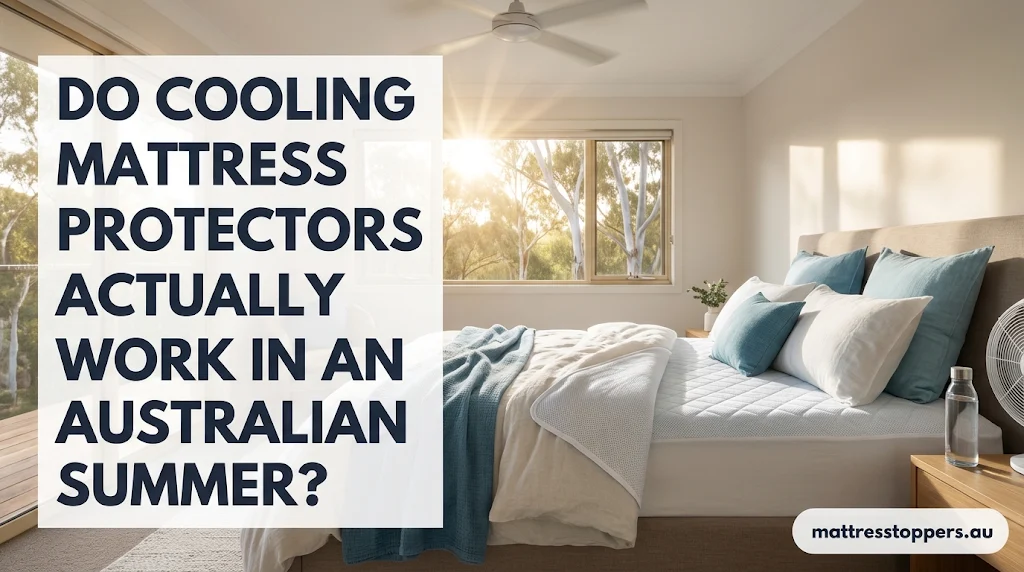
Partly. A good one makes a bed feel fresher and drier. It will not turn a 30 degree night into a cool one. Here is what a cooling protector can do, where it falls short, and how to build a bed that copes with an Aussie summer.
What Does “Cooling” Really Mean?
Most cooling claims describe a cool first touch. Fabric that sits below skin temperature pulls warmth from you fast, so it feels fresh the moment you lie down. The sensation is real, but it peaks early and fades as the cloth warms up.
Roll onto a spot you have not warmed and the cool touch returns, which is why people keep flipping over on hot nights. Some cool feels come from the fibre. Others come from a finish applied later, and finishes can wear off in the wash.
What Can a Cooling Protector Genuinely Do?
Its real strength is moisture. In summer, sweat is the big issue. A breathable cover lets moisture leave instead of sitting against your skin, and sweat only cools you when it can evaporate. Humid weather makes this harder, which is why a damp, sticky bed feels so much worse than a dry one.
So a good protector can help in three ways:
- It feels cool when you first lie down.
- It lets heat, air and moisture pass through.
- It keeps sweat out of the mattress.
It cannot drop you below room temperature. No plain fabric can.
Why Do Some Protectors Make Summer Worse?
Because not all protectors breathe. A heavy, plastic-backed layer can hold heat and moisture against the body. Thick quilting adds insulation. A tight, non-stretch fit can also reduce airflow around the sleeping surface.
When you shop, look past the word “cooling”. Check the fabric, how thin the waterproof layer is, and whether the listing says breathable. Our list of what to avoid in a mattress protector flags the usual culprits, and what type of mattress protector is best sorts the styles.
Which Fabrics Suit Hot, Humid Weather?
Think light, open and quick to dry.
- Cotton: soft, breathable and easy to wash.
- Bamboo: silky and cool, with good moisture handling.
- Moisture-wicking knits: pull sweat away from the body.
- Thin waterproof backing: protects without trapping heat, if you need it.
Skip heavy fills and stiff plastic. If you do not need waterproofing, a simple breathable protector is often the coolest choice.
Does the Protector Cancel the Cooling of Your Mattress?
It can change what you feel. Your skin touches the sheet and the protector first, so they shape the first-touch feel more than the mattress beneath. A bulky protector can mute any cooling in the layer below it.
This is why a thin, stretchy fit matters. It stays close to the mattress and does not smother it. For sizing, read how to choose the right mattress protectors.
What Matters More Than the Protector?
Often, everything else. Tests on heat and sleep point to bedding, clothing and moving air as bigger levers than the mattress itself. Try changing one thing a night and see how you wake.
- Swap a heavy doona for a light cover or just a sheet.
- Run a fan on high. A fan on low tends to do little.
- Cool the room before bed with curtains, a window or air conditioning.
- Use light, open-weave sheets.
- Take off any extra layer for a night to see if it helps.
Wake up fresher after one change? Then the setup, not the bed, was the problem.
What About Hot Sleepers on Foam?
Dense foam holds warmth, which is why memory foam draws so many complaints in warm weather. The fix is not always to abandon it. A breathable protector, a lighter sheet and a thinner topper can all help. If you sleep very warm, latex and bamboo are good alternatives. Browse latex mattress toppers and bamboo mattress toppers, or compare memory foam mattress toppers with cooling options. Why some people are moving away from memory foam toppers covers the heat debate in more detail.
Do You Still Need a Protector in Summer?
Yes. Summer means more sweat, which is exactly what a protector catches. It keeps moisture out of the mattress and gives you something washable. Wash it more often when it is hot. Two guides set the pace: how often a mattress protector should be washed and can I wash a mattress protector in the washing machine. Follow the care label, and dry it fully first.
How Do Toppers and Protectors Work Together?
A topper changes the surface you lie on. A protector keeps the bed clean. In summer, thinner and breathable usually wins. Thinner depths such as 5cm tend to feel cooler than 10cm. To compare roles, see mattress topper vs mattress protector, and for materials, which kind of mattress topper is best.
FAQs
Do cooling protectors work in a heatwave?
They help with feel and moisture, but a heatwave needs help from fans, light bedding and a cooler room.
Will a cooling protector stop night sweats?
It can keep the bed drier and more comfortable. It is not a medical fix, so see your doctor if sweating is heavy or unexplained.
Are waterproof protectors hotter?
Thick plastic ones can be. Thin, breathable membranes are far better.
Should I take the protector off in summer?
No. Choose a lighter, breathable one instead and wash it regularly.
Does a cooling cover last?
Fibre-based cooling tends to last longer than a surface finish. Follow the care label.
Sleep Cooler at Mattress Toppers AU
Build a bed that breathes. Shop mattress protectors that stay light under the sheet, then add a mattress topper in the depth and feel that suits you, all at Mattress Toppers AU.