
 Mattress Toppers
 Bamboo Mattress Toppers
 Latex Mattress Toppers
 Memory Foam Mattress Toppers
 Mattress Protectors
 Accessories
Mattress Topper for Sagging Mattress: Does It Actually Work?

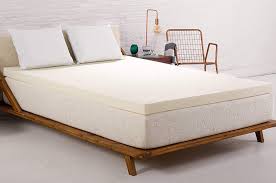
Not really, and it is worth being honest about that upfront. A topper changes how the surface of your bed feels. It has no mechanical connection to whatever is actually causing the sag underneath, whether that is broken springs, a collapsed foam core, or slats that have given way. Confusing surface comfort with structural support is the single most common mistake people make when trying to fix a sagging bed.
What People Assume a Topper Does, and What It Actually Does
The common assumption is that adding cushioning on top somehow restores support underneath, as if softness and structure are the same thing solved by the same layer. They are not. A topper sits entirely above the problem. It cannot reach the coils, the foam core, or the base that has actually failed, no matter how thick or dense the topper is. What it changes is the immediate feel under your body, nothing below that. For the broader question of what a topper can and cannot change, do mattress toppers actually make a difference covers it beyond just sagging specifically.
Will a Mattress Topper Fix My Mattress?
Only if the issue is genuinely minor. A shallow, cosmetic unevenness on a mattress that is otherwise structurally sound can be smoothed out reasonably well by a topper. A real sag, the kind you can measure with your hand or a straight edge, is a different problem entirely. Soft or thin toppers make this worse in one specific way: rather than filling the dip, they simply drape into it and take on the same shape, so your spine ends up just as unaligned as before, now with a softer surface on top of the misalignment.
Do Mattress Toppers Add Support?
Not in the structural sense, no. A dense, firm topper, high density latex or thick firm memory foam in particular, can even out the surface enough to mask a shallow dip for a while and give a flatter feel to lie on. That is surface level evening out, not support. It does nothing to restore broken springs or a foam core that has genuinely compressed and lost its resilience. Over time, a topper placed over real sagging tends to develop the same shape the mattress already has underneath it.
What Counts as a Mattress Indentation a Topper Can’t Fix?
A rough but useful guide is depth and consequence. A dip you can barely notice with your hand is usually fine to live with or smooth over. A dip deeper than about two to three centimetres, or one that comes with actual back or hip pain, has generally gone past what a topper realistically helps with. Our guide on what mattress to stay away from covers the fuller list of warning signs if you are not sure which category yours falls into.
Mattress Topper vs Plywood or New Slats Under the Mattress
This is the fix most people skip straight past, and it is often the more honest answer. Sagging is very frequently a foundation problem rather than a mattress problem. Broken, warped, or too widely spaced slats, or a box spring that has given way, will make even a perfectly good mattress feel like it is sinking in the middle. A solid board or a sheet of plywood placed under the mattress, or simply replacing worn slats, addresses the actual mechanical cause directly, which no topper ever touches. Before spending money on a topper for a sagging bed, it is worth checking what is actually underneath the mattress first, since the cheapest real fix is sometimes sitting right there.
A Genuinely Useful Trick If You’re Not Ready to Replace Yet
If the sag is isolated to one spot and you are not ready to replace the mattress, a rolled towel or a firm pillow placed directly under that specific area inside the bed frame can give a bit of localised lift. It is a genuine, low cost stopgap, though it is a patch rather than a fix, and it works on the same principle as checking the slats: addressing what is underneath rather than adding more on top.
So When Does a Topper Actually Make Sense on a Sagging Bed?
When the unevenness is shallow rather than structural, when you have already ruled out or corrected a failing foundation, and when you want a temporary bridge while saving for a proper replacement. In that specific situation, a firm, dense option like memory foam or latex will hold up better than a soft one, since it resists conforming to the dip rather than sinking straight into it. It is still a bridge, not a repair, and worth going in with that expectation set correctly.
FAQs
Can a topper make a sagging mattress worse?
Not worse structurally, but it can create a false sense that the problem is solved, which sometimes delays people from fixing the actual cause. The sag itself does not improve underneath the topper.
How do I know if the sag is my mattress or my bed base?
Remove the mattress and check the slats or box spring directly for gaps, warping, or broken sections. If the base looks intact, the mattress itself is the more likely source.
Is a firm topper better than a soft one for a sagging mattress?
Yes, generally. A firm, dense topper resists conforming to the shape of the dip better than a soft one, which just settles into it and changes very little.
Should I fix the slats before buying a new mattress?
Yes, always check this first. A failing base can make a perfectly good mattress feel sagged, and fixing it is far cheaper than replacing either the mattress or the topper unnecessarily.
Fix the Right Layer at Mattress Toppers AU
Sagging usually starts below the mattress, not on top of it, so check the foundation before assuming a topper will solve it. If your mattress and base are both genuinely sound and you just want a better feel, Mattress Toppers AU stocks memory foam, latex, and bamboo toppers built for exactly that. Browse the full range once you know which layer actually needs the fix.