
 Mattress Toppers
 Bamboo Mattress Toppers
 Latex Mattress Toppers
 Memory Foam Mattress Toppers
 Mattress Protectors
How Often Should You Actually Wash a Mattress Protector?

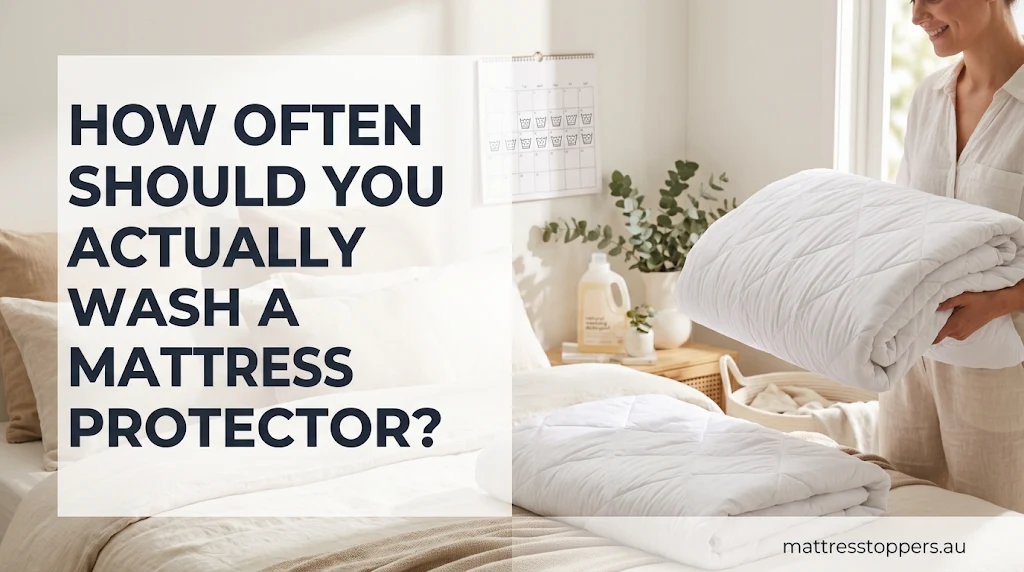
Every one to two months suits most beds. Wash it sooner if you have kids, pets, allergies or warm nights, and straight away after a spill. That is the short version. Here is how to fit it to your own bed, without turning laundry day into a chore.
Why Does a Protector Need Washing at All?
It catches what your sheet lets through. Sweat, skin oils, dust and the odd spill soak past a fitted sheet and land on the layer beneath. The protector holds them so your mattress does not. That is its whole job, and it only keeps doing it if you clean it.
Your sheets go in the wash weekly since they sit against your skin. The protector is a layer further away, so it dirties more slowly. Slower is not the same as never.
What Is a Sensible Schedule?
Match the wash to how your household sleeps. Use this as a guide.
- Most households, single sleepers or couples: every one to two months.
- Hot sleepers or humid weather: every two to four weeks.
- Children, or anyone toilet training: every two to four weeks, plus after any mishap.
- Pets on the bed: every two to four weeks.
- Allergy sufferers: consider every two to four weeks.
- Guest bed: after each stay.
- Any spill, accident or illness: straight away.
A handy tie-in: launder it on every second or third sheet change. If you shower before bed and keep pets off the mattress, lean towards the longer gap.
How Do You Know It Needs a Wash Sooner?
Your nose and eyes are better than the calendar. Whenever you strip the bed, glance at the protector and take a sniff. It is due if you spot:
- A stale or musty smell.
- Marks, even small ones.
- A clammy or damp feel after a warm night.
- A stiff or crunchy patch where moisture has dried.
- A recent bout of illness in the house.
Yellowing is a warning sign too. What causes yellow stains on a mattress protector explains why it happens and how to head it off.
Does Summer Change the Answer?
Yes. Australian summers mean more sweat and more humidity, so a protector gets damp faster. Bump the schedule up to every few weeks when it is hot. The upside is that sunny, breezy days make drying easy. Wash in the morning and it can be dry well before bedtime.
If you sleep on a topper, the protector protects it as well, so a clean one keeps both layers fresher. See mattress topper vs mattress protector for how the two work together.
How Do You Wash It Properly?
Follow the care label first. Then keep to gentle habits.
- Strip the bed and unhook the corners.
- Blot fresh marks gently with mild soapy water on a cloth. Skip hard scrubbing.
- Give the protector room in the drum so it rinses well.
- Use a gentle cycle with warm or cool water, as the label directs.
- Use mild detergent. Avoid bleach and fabric softener.
- Dry it completely before it goes back on the bed.
Waterproof backings are sensitive to heat, so go easy. For settings and drying, read can I wash a mattress protector in the washing machine.
What Should You Avoid When Washing?
A few habits shorten a protector’s life.
- Hot water and hot dryers, which can harm waterproof layers.
- Bleach and harsh stain removers.
- Wringing or twisting it hard.
- Putting it back damp, which can leave a musty smell.
- Ignoring the label because “it is only a protector”.
If you are shopping, what to avoid in a mattress protector helps you pick one that handles repeat washes, and what type of mattress protector is best compares the styles.
Should You Own a Spare?
It is worth it. A second protector means the bed is never bare while one is in the wash or drying. It also saves you at 2am after an accident. Caught without one? Stopgaps are covered in what to use instead of a mattress protector. For the long term, how to choose the right mattress protectors explains sizing, including depth for a topper.
Does the Order of Layers Matter?
Yes, because it decides what stays clean. The protector goes over the mattress and any topper, under the fitted sheet. For the exact order, see do I put a fitted sheet on top of a mattress protector. If you use a topper, what goes first, a mattress topper or a sheet settles it. Hotels stay on top of this too, as what hotels use to protect their mattresses shows.
FAQs
Can I wash a protector too often?
Rarely, but frequent hot washes wear it faster. Keep it gentle and follow the label.
Should I wash a new protector before using it?
It is a good habit. It freshens the fabric after packaging and storage.
How do I dry a waterproof protector?
Hang it in the shade, or use a low dryer setting if the label permits. Make sure both sides are fully dry.
Do I need to wash the topper as well?
Check its care label first. Foam toppers usually need airing and light spot cleaning, not a machine wash.
What if the protector still smells after washing?
It may not be fully dry, or it may need another rinse. Dry it completely before refitting.
Keep Your Bed Fresh at Mattress Toppers AU
A clean protector keeps everything beneath it comfortable. Shop mattress protectors, grab a spare, and pair them with a mattress topper, all at Mattress Toppers AU.