
 Mattress Toppers
 Bamboo Mattress Toppers
 Latex Mattress Toppers
 Memory Foam Mattress Toppers
 Mattress Protectors
 Accessories
How Thick Should a Mattress Topper Be? A Guide by Firmness

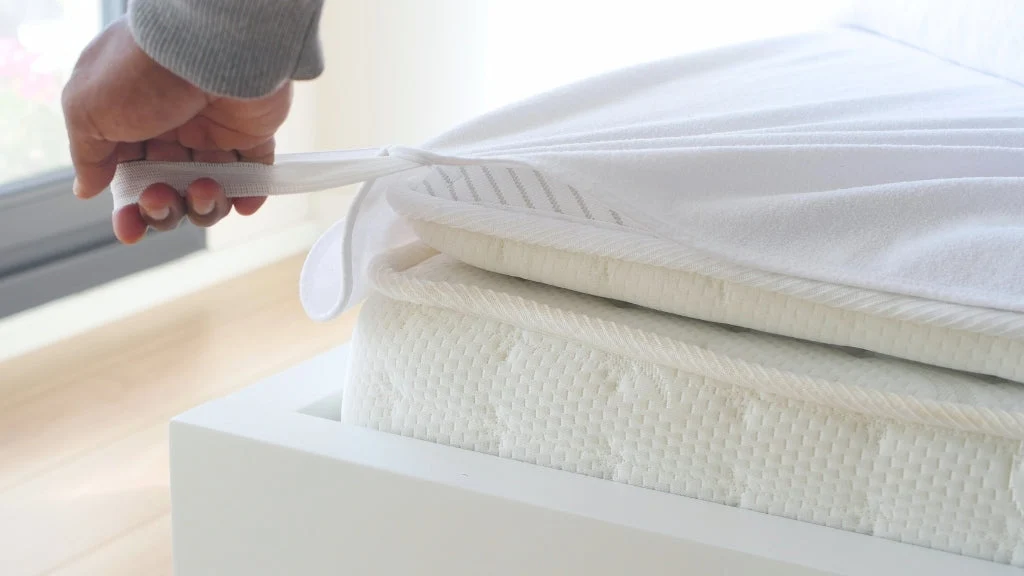
Thickness and firmness pull against each other more than most buying guides admit. More thickness generally means more cushioning, but past a certain point it also means more sinkage, and sinkage in the wrong place can throw your spine out of alignment rather than supporting it. This guide looks at thickness specifically through that lens. For the fuller breakdown by sleep position and mattress condition, what thickness mattress topper is best covers that side of the decision.
The Trade Off Nobody Explains: Thickness vs Support
Every extra centimetre of topper adds cushioning, but it also adds distance between your body and the firm support layer underneath. Up to a point, that is exactly what you want, since it relieves pressure at the hips and shoulders. Past that point, you start sinking further than the topper can properly hold you, and your spine can curve out of its natural line rather than staying level. Getting the thickness right is really about finding where cushioning stops helping and starts working against support.
2 Inch vs 3 Inch: What’s the Real Difference?
Roughly 5cm and 7 to 8cm respectively, and the gap between them is bigger than the numbers suggest. A 5cm topper makes a light adjustment. You will notice a softer surface, but the underlying firmness of your mattress still does most of the supporting work, so the alignment risk stays low. A 7 to 8cm topper is a genuinely different comfort layer. It changes the character of the bed rather than just softening it, which means more pressure relief, but also more responsibility for you to check that your spine is still staying level rather than sinking unevenly.
If You Want a Firm, Supportive Feel
Stay toward 5cm, and pair it with a responsive material rather than a deeply contouring one. Latex suits this combination well, since it adds a touch of cushioning without letting you sink far enough to compromise support. A thin, firm topper is the lowest risk option for alignment, since there is simply less depth for your body to sink unevenly into.
If You Want a Soft, Plush Feel
Here is where the trade off matters most. Moving toward 7 to 10cm with a soft, low density memory foam gives real plushness, but it is also where alignment problems most commonly show up, particularly for back and stomach sleepers whose hips can sink lower than their shoulders on a very soft, very thick topper. Side sleepers generally tolerate this combination better, since more sinkage at the hip is closer to what that position actually needs. If plush is genuinely the priority, check that your lower back still feels supported after a few nights, not just soft on the first one.
Can You Stack Two Mattress Toppers Instead of Going Thicker?
It is not a good substitute, and the firmness angle explains why more clearly than the stability issue alone. Two stacked toppers, especially if they are different firmness levels, create uneven support rather than one predictable surface. Your body compresses each layer differently, which makes consistent spinal alignment far harder to achieve than with a single topper chosen at the right thickness in the first place.
How Do You Check the Thickness and Firmness Combination Is Actually Working?
Lie in your normal sleep position for a few minutes and pay attention to your lower back specifically, not just general comfort. If it feels like it is arching or unsupported, the combination is too thick or too soft for how you are sleeping. If you still feel firm pressure at your hips or shoulders within the first minute, it is too thin or too firm for what you actually need. A properly matched combination should let those pressure points ease within a minute or two while your lower back still feels held rather than floating.
What Actually Happens When a Topper Is Too Thick?
The main consequence is alignment, not just comfort. Too much give lets your hips sink lower than your shoulders, or vice versa depending on your sleep position, pulling your spine out of its neutral line rather than supporting it. You will often feel this as new lower back discomfort rather than the relief you were expecting. There are practical consequences too, added bed height and the need for deeper pocket sheets, but the support issue is the one worth paying attention to first.
FAQs
Is a firmer topper always thinner?
Generally, yes, though not strictly. Firmer materials like latex can be a little thicker without the same sinkage risk as a soft memory foam of the same depth, since they resist compression more.
Does firmness change the right thickness for the same person?
Yes. The same sleeper may want a thinner firm topper on one mattress and a thicker soft one on another, depending on how much support the mattress underneath is already providing.
Should back sleepers go thinner than side sleepers regardless of firmness preference?
Generally yes. Back sleepers are more exposed to alignment problems from excess thickness, since their whole spine needs to stay level, while side sleepers can usually handle more depth without the same risk.
Can the wrong firmness cause problems even at the right thickness?
Yes. A soft material at a moderate thickness can still let you sink further than a firmer material at that same depth, since firmness controls how much you compress into the topper as much as thickness does.
Get the Thickness and Firmness Right at Mattress Toppers AU
The right thickness depends on the firmness you are chasing, not just your mattress or sleep position alone. Mattress Toppers AU stocks 5cm, 7cm, and 10cm options across memory foam, latex, and bamboo, so you can match both variables rather than guessing at one. Browse the full range and choose the combination that keeps you supported, not just cushioned.